Filipiñana Reel Voices Review
By Leona Suri

By Leona Suri
Mabuhay! Mabuhay! Or as we say in English, welcome! Come spend your summer in a paradise pruned to perfection, dripping with colour, and oozing with the unmistakable stench of something rotten beneath the surface. Rafael Manuel's FILIPIÑANA follows seventeen-year-old Isabel through a day working as a tee girl on an obscenely immaculate golf course.
The film opens in central Manila, in perhaps the only scene where we experience true, everyday human chaos. From the windscreen of a tour bus, we watch as it narrowly misses a small child. Our guide jokes about God saving them from the oppressive heat, while families clamour for water and someone shouts “One container per family!” Then, we cut to the golf course sprinklers, decadently soaking the painstakingly manicured grass. Stream after stream of water that may as well be liquid gold. This juxtaposition immediately establishes the film's central focus: the absurd inequality upon which such carefully manufactured luxury depends.
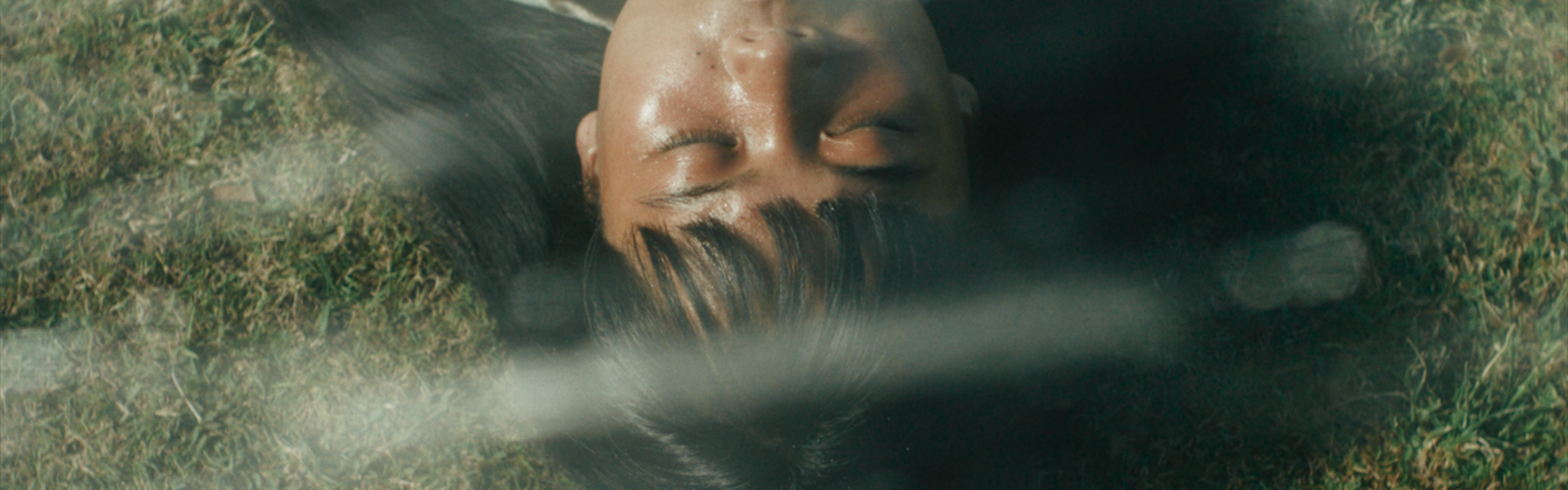
We follow two young women occupying opposite ends of this meticulously maintained hierarchy. Isabel, an Ilocano girl newly employed at the club, sits at the very bottom. As she tees up impossibly yellow golf balls, the camera frames her face between the golfers’ legs. They stand above her, swinging with lackadaisical ease, looking down on her in every sense. Clara, conversely, is the club owner’s niece, visiting from New York. Her reluctance to abandon her American life offers an interesting point of comparison. Both girls move through their day with the same sullen expression painted on their faces, though their experiences of this sprawling luxury could hardly be further apart.
The film is almost Wes Anderson-like in its devotion to symmetry. Workers sweep and clean in perfect synchronisation with the music. Golf carts whirr quietly past in an orderly procession. Three sunbathers hold identical magazines at precisely the same height. Even the swings of the golf clubs and the replacement of the golf balls appear strictly choreographed. The golfers, identically dressed in linen trousers, button ups and hats, seem to follow as strict a uniform as the staff themselves. Everyone has their place.
Shot in a near-square aspect ratio, the film is stunningly composed. Its colours are obscenely rich: the immaculate grassy green, the sunny yellow golf balls, the crisp aqua blue and silky peach uniforms. Yet this beauty is stifling. Music is used sparingly, and the near-absence of background noise contrasts sharply with Manila's opening chaos. Silence, it seems, is another privilege that money can buy.
Throughout, food becomes a symbol of decadence and decay. Mangoes lie rotting in the heat, ants picking away at their golden flesh, while Isabel cherishes a single ripe mango, to the last drop of juice dribbling down her face. A hog's head sits untouched, flies buzzing around it; sickeningly perfect cakes decorate a deserted table. Abundance has become so commonplace that it has lost all value. Everything is ripe, rich and slowly rotting. Nature, too, is subjected to the club's obsession with control. Trees die, are cut down and replaced, as though even the natural world must conform to the demands of perfection. Only during a rumbling storm, when Clara searches for a lost golf ball, do we see an unruly portion of the natural world, briefly exposing the darkness beneath the immaculate surface.
One particularly beautiful sequence shows translucent chiffon fluttering gently as we hear the legend of Ylang-Ylang, a young woman whose chastity transforms her into a flower. We learn that these flowers are harvested for expensive perfumes, including Chanel No. 5, the club president's favourite. The symbolism feels unmistakable. Like the flowers and dying trees, the tee girls and caddies are beautiful, disposable things, cultivated and harvested for the pleasure of the wealthy, only to be replaced when they wither.
A mysterious little girl in red, adorned with golden dragonfly hairpins, drifts through the film like an unsettling apparition. We simmer in the heat, waiting for the carefully maintained perfection to rupture. Of course, a dramatic reckoning would hardly be in keeping with the luxury golf course experience.
FILIPIÑANA is a film in which everything is saturated with colour, yet strangely devoid of life. Its beauty is almost unbearable, its cruelty quiet and deeply embedded. Manuel drums home the same point again and again: beneath every immaculate surface lies something rotting, and paradise, when so perfectly pruned, becomes its own kind of prison.