My Family and Other Clowns Reel Voices Review
By Iria Rodriguez-Bejarano

By Iria Rodriguez-Bejarano
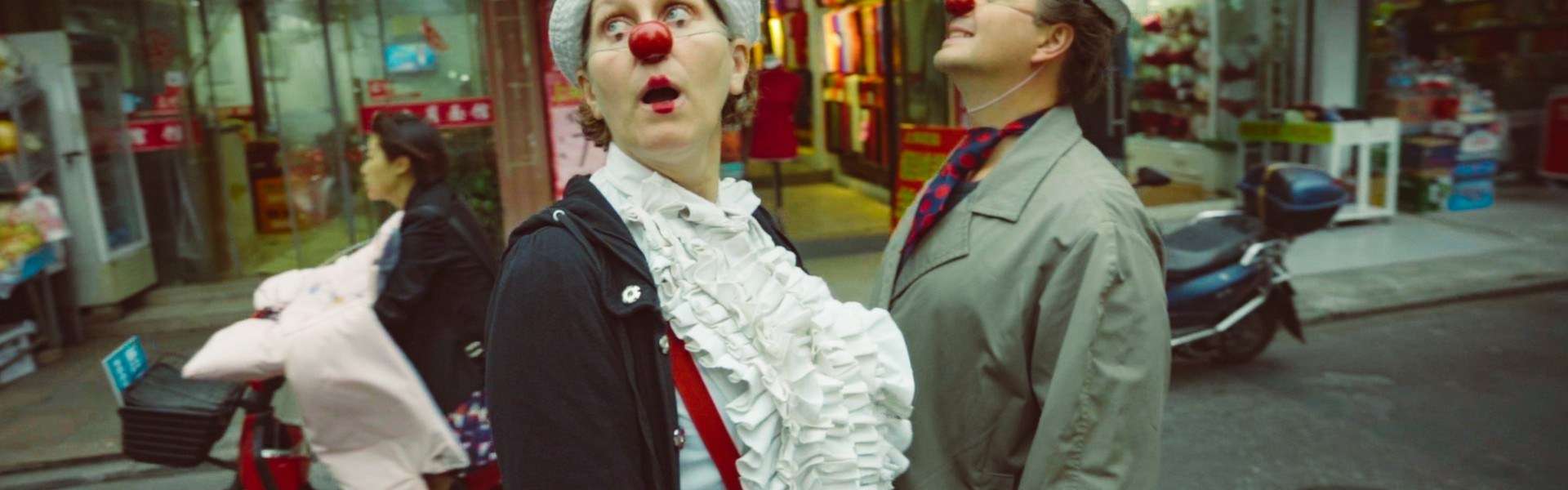
For Haide Männamäe and Toomas Tross, entertaining children is more than a profession. Known as the Estonian clown duo Piip and Tuut, they have dedicated their lives to bringing laughter to young audiences around the world. Yet behind their playful stage personas lies a more complicated family life. MY FAMILY AND OTHER CLOWNS explores the tension between their commitment to making other children happy and the needs of the three children waiting for them at home.
The documentary first draws us into the warmth and exuberance of their work. The couple demonstrate their talent as performers and their contribution to Estonia’s cultural life. We follow them on their travels to China, where delighted children’s faces make it clear how much their profession means to them.
As the focus shifts towards their own children, Emma, Siim and Anni, the cheerful atmosphere that follows Piip and Tuut everywhere dissipates. Their demanding career leaves little time to bring the same joy to their children, with much of the responsibility falling to Emma, their eldest daughter. Alongside supporting her autistic brother, Siim, she must navigate her own ambitions and the expectations placed upon her. Her dream of pursuing a career not unlike her parents’ makes her position especially captivating. She expresses how their creative work has contributed to her struggles with her own creativity.
The interviews are among the documentary’s most affecting elements. The family members speak with such sincerity and vulnerability that it is easy to forget the presence of an interviewer, who remains completely off-camera. Their rawness draws the audience into the intimacy of their relationships, while the filmmaking team largely recedes from view. This restraint gives their accounts room to breathe, allowing affection, frustration and uncertainty to coexist without reducing the family to a simple conflict between devoted performers and neglected children.
Beneath this apparent simplicity is a carefully shaped narrative. The non-chronological editing allows for a gradual reveal of the family’s difficulties, deepening our understanding as each perspective emerges. Home videos offer glimpses of happiness, closeness and shared memories.
Beyond its intimate portrait of family life, MY FAMILY AND OTHER CLOWNS considers the place of art within a community, from how it connects people, shapes ambitions and gives purpose, to what it asks of those who create it. The documentary itself becomes part of that exchange, inviting audiences to recognise something of their own lives in this family. At the film’s heart is a difficult contradiction: Haide and Toomas have built their careers around bringing joy to others, yet struggle to make enough room for it at home. The film’s tenderness lies in acknowledging both the value of that work and the personal cost of sustaining it.